
Part 3: When Grief Belongs
Conversations About Grief | Grief Awareness Month
Grieving can be such a lonely experience. I used to keep a tight lid on my grief, which only created deeper heartache and feelings of isolation.
I also told myself that I wasn’t the support group type.
I'm still intentional about what I share, with whom, and whether a space feels safe. But my view on sharing parts of my story and participating in groups has changed.
I move differently with my grief now.
I now have evidence that meaningful support can be found through connection with the right people.
The Group I Didn’t Know I Needed
I was diagnosed with breast cancer in 2013.
Following my first surgery, I was told I needed more and was considering a few options. My nurse navigator suggested I join a support group at my hospital. She told me there was something special about this particular group. In spite of my reservations, I gave it a try. I was 49 at the time and most women in the group were my age and younger.
During my very first meeting, I shared that I was trying to decide on my next treatment step. One woman across the room spoke up immediately with: “I had a bilateral mastectomy three months ago. No regrets! If it’s fear that’s holding you back, don’t let it. You’ll be fine and we’ll be here to support you.” They followed through with that promise.
My then-husband and friends could not offer this type of real-life evidence and encouragement.
In this room, rage, fear, sadness and laughter were all welcome.
My grief was supported in that hospital conference room, years before I even realized I was grieving.
I’d found a place where I belonged.
Not All Groups Are a Good Fit
A few years later, I found the courage to try another group. These meetings brought together parents of children struggling with addiction.
Hearing some of the stories made me feel activated rather than supported. At the time, I didn’t have the bandwidth to take in the heartbreak of other families. I was already living with more than I felt I could carry.
I didn't yet understand that I was grieving the ambiguous loss of my son and our relationship.
This group was not what I needed, and learning to recognize that was important. I began paying closer attention to how I felt during and after these meetings and honoring what I needed. Not every space where grief is shared will feel safe or helpful.
From Observer to Participant
Fast forward almost 10 years to this past January, when I drove up to Kripalu in Massachusetts to attend a grief retreat.
My intention when registering was to learn how to better serve my clients.
I accomplished this, but not by taking notes on methodology.
Within the first few hours, I stopped observing and fully stepped in as a griever.
Meghan Riordan Jarvis masterfully facilitated a powerful group experience. The dynamics were intense and complex, as we each came with multiple losses, some quite recent. Clear boundaries helped create the safety we needed to trust one another.
I learned how to flow with and honor my grief and my life in new ways. I felt like I belonged and so did my grief.
Sometimes Groups Form Organically
Just five months later, while in an immersive training in Italy, I learned my Mom was very ill. She’d had dementia for 17 years and when I left Philadelphia she was in good physical health, or so I thought.
This wasn't a course about death and dying or about grief. We were there to learn ImageWork, an imagination and visualization modality developed by Dina Zohar Glouberman.
Dr. Glouberman and nineteen therapists and coaches from across Europe and beyond supported me through what became my Mom’s final two days.
I could not have designed a more loving place to be while losing my mother. As I was becoming the last surviving member of my family of origin, this group of colleagues, many of whom I’d just met, provided a space of belonging.
This was one of the most sacred experiences of my life.
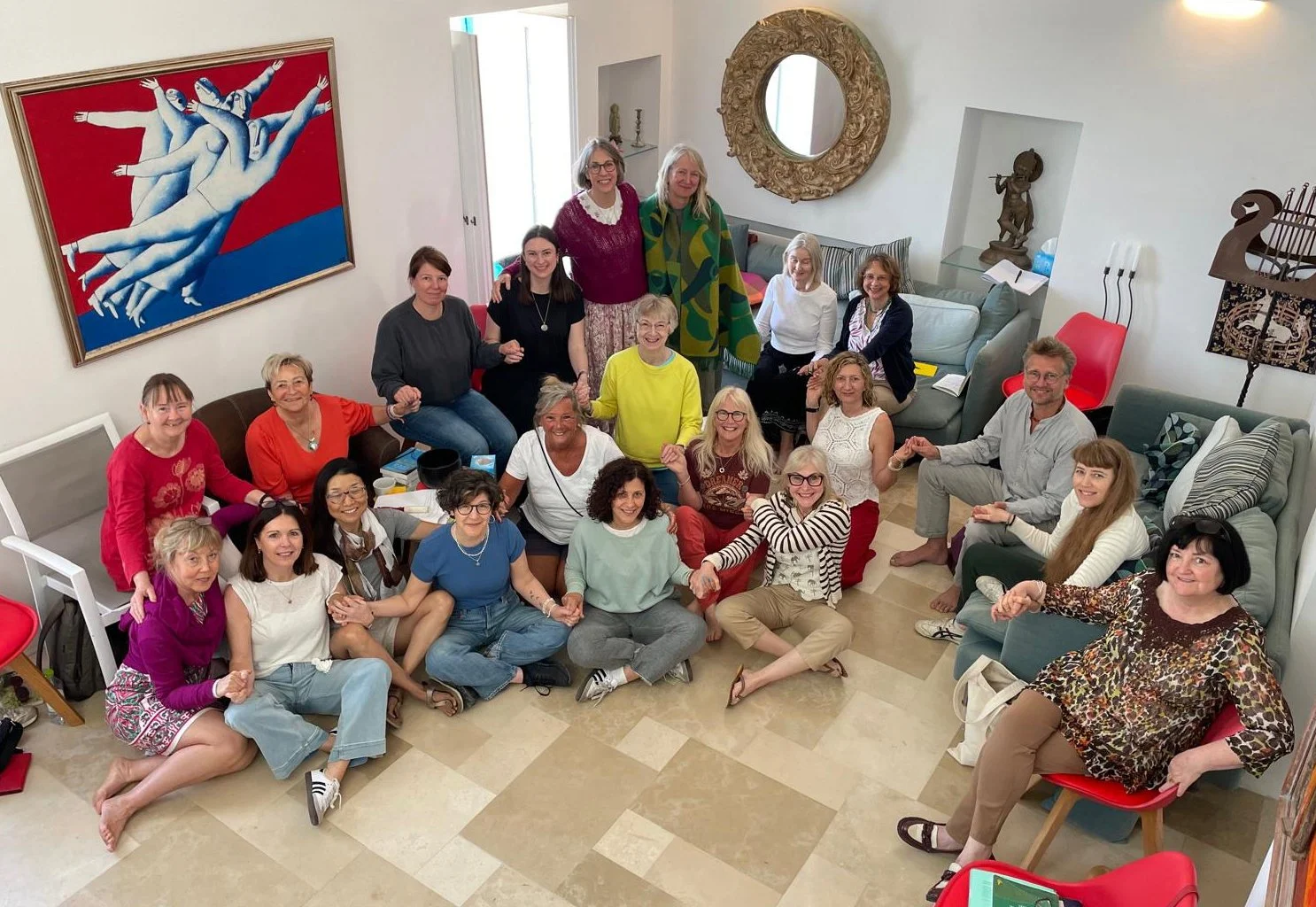
ImageWork training. Monopoli, Italy. May, 2026
Then I flew home.
After experiencing such deep connection in Italy, I felt untethered and alone upon my return. For the first time, I could clearly recognize what I was missing.
I could feel what I needed in my body and spirit. Instead of retreating into my grief, I reached out to friends. Nothing complicated or lengthy. I just needed a little connection each day.
Some days it was a conversation over coffee.
Some days a hug and quick chat after fitness class.
Some days I’d join a friend for their evening dog walk.
Sometimes I needed to talk about my Mom. Other times, I just needed someone's company. We barely had to speak.
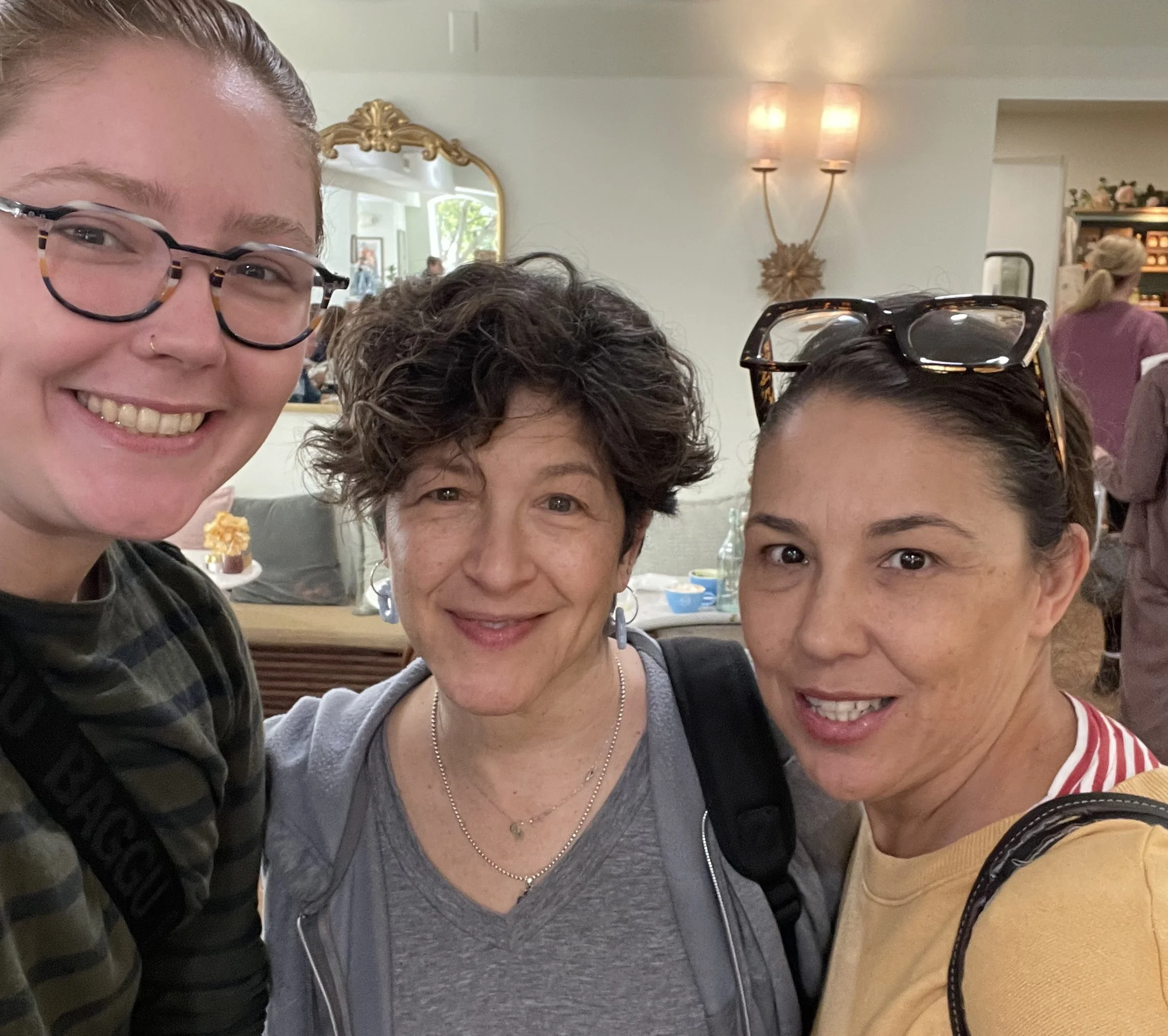
Don’t get it twisted, I love my solitude and my own company.
There’s a difference between solitude and isolation, though. Solitude can restore me. Isolation can deepen my grief. I've gotten better at recognizing the difference.
Some loneliness in grief may be unavoidable. After all, we are the only ones who had our particular connection to that loved one, that job, or that pet. A diagnosis happens in our own body. The grief that comes with the loss of a marriage or partnership is uniquely ours.
And still, finding people and places where we feel we belong can help us through profound loss.
Some parts of grief belong only to us.
That doesn't mean we have to carry all of it alone.
Not All Connections Are Alike
Find the kind of connection that works best for you.
I've learned that connection doesn't have to look a certain way. What helps may depend on the loss, the moment, and where we are in our lives.
Sometimes it's a formal support group or retreat. Sometimes it's a spontaneously formed community. Sometimes it's two or three people, or even just one trusted friend.
Sometimes it's simply coffee, a walk, or a hug after class.
What keeps us from connecting?
Reaching out can be tough, especially when we’re grieving.
Maybe we don’t want to burden others or bring them down.
Maybe vulnerability doesn’t feel safe.
Maybe we’re afraid our grief will be judged.
What if we develop a language for the grief we're walking with and practice speaking it?
And what if we learn to become more comfortable hearing about someone else's loss?
Maybe then…
Families would talk more easily and more often.
Friends might not disappear when things get hard.
Coworkers wouldn’t have to pretend they don’t know.
Leaders could acknowledge and support what's happening, rather than avoid it.
We'd still have to grieve. We always will. Even surrounded by others, grief can still feel lonely.
But perhaps more of us would know that we don't have to hide our grief in order to belong.
This is the third of three Grief Awareness Month essays about communicating through grief.