
Eat the Ice Cream
I'm old school. I still keep a journal and write in notebooks before moving to my laptop.
It feels good to be writing again.
I cry off and on as I put thoughts and feelings into words, but grief waves are a normal and frequent occurrence right now.
I'm back to eating and sleeping well enough. I'm making it to my fitness classes again. I'm meditating. I've been intentional about checking in with friends, so I don't isolate myself.
I'm not sure why it took so long to return to writing. I suspect there's something about putting words on a page that makes what has happened more real. Recording it confirms the loss and how much I'm hurting. I guess I wasn't ready to make it official until now.
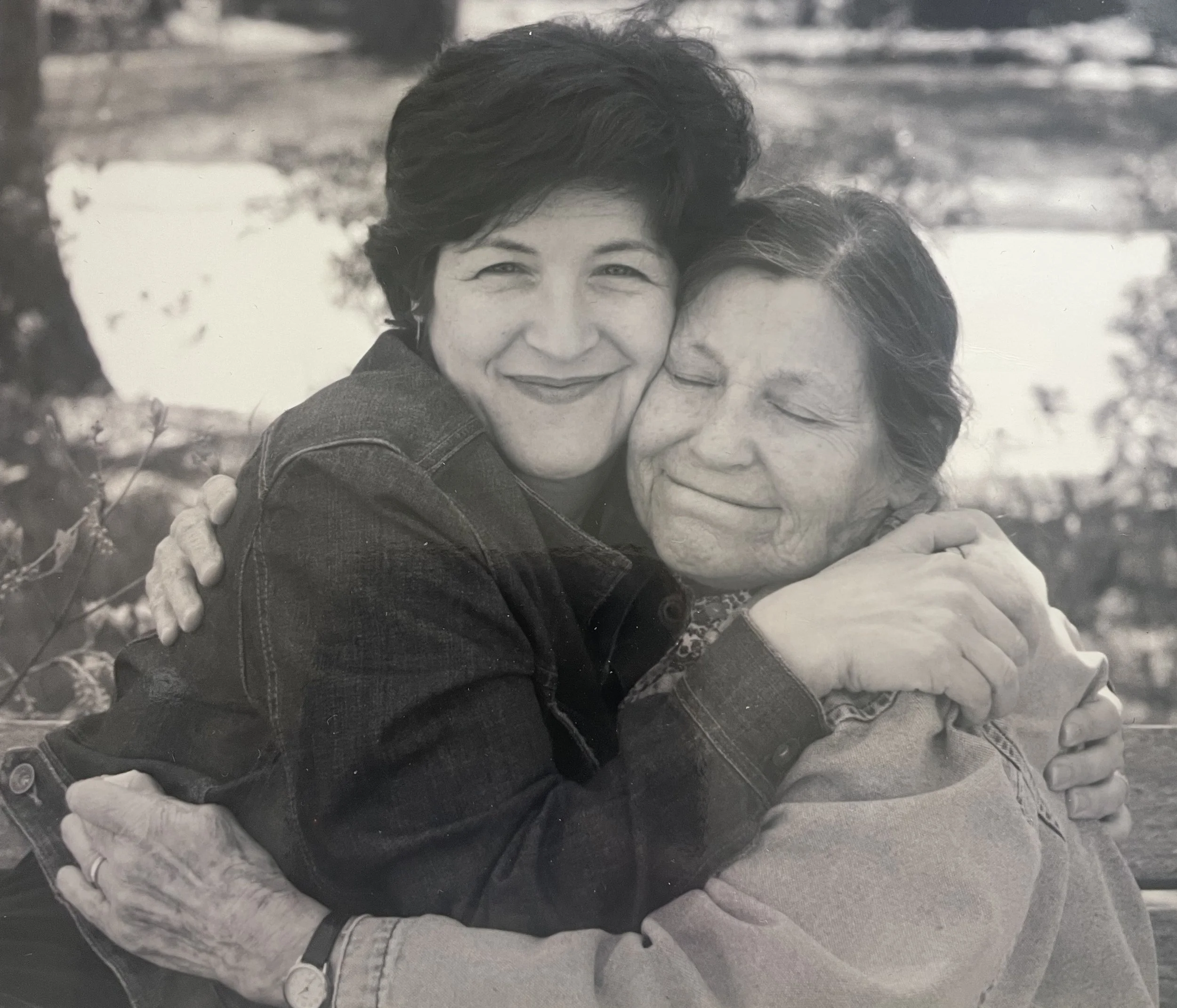
My Mom died last month at the age of 94 after living with dementia for 17 years.
I knew it was going to happen someday.
I thought I was ready to say goodbye.
I wasn't.
There is so much about losing my Mom that I never expected. So much to notice about living inside a loss I've spent years anticipating.
One of the things my mother's death is teaching me is that ambiguous loss and death loss are not the same thing.
For years, I grieved my Mom in pieces.
One Mother's Day, shortly after COVID restrictions eased, we were having brunch outdoors at her care community.
She looked at me with a huge smile and said, "You're so lovely. Remind me how we met."
I took a breath and replied, "I think we met the day I was born because you're my Mom."
Her face lit up.
"Oh my," she said. "This is the best day of my life! No one told me I had a daughter. This is wonderful news."
It was both the sweetest and most heartbreaking thing she could have said.
I held it together until I got to my car and then completely fell apart.
That moment taught me something I would spend years learning over and over again: grief and love can and often do occupy the same space. I could mourn what dementia had taken while still appreciating the joy and connection available when staying in the present moment.
That was much of my last seventeen years. Living with both.
On a podcast in 2020, I heard research psychologist, Dr. Pauline Boss, describe a term she coined: ambiguous loss. One form occurs when someone is physically present but psychologically absent because of dementia, addiction, mental illness, or estrangement.
The concept resonated deeply. I actually had no idea I'd been grieving.
What exactly was I grieving?
I grieved the changes in my Mom's memory, abilities, and parts of her personality. I grieved the gradual loss of the relationship we once shared. I grieved becoming her caregiver rather than simply her daughter. I grieved the loss of who I was with her before dementia.
When we lose someone, we can lose pieces of ourselves too.
I also grieved the uncertainty that accompanied her decline. My Mom's physical health deteriorated alongside her memory. She fell often, was on hospice multiple times, and seemed to hover between realms in her final years. Anticipatory grief can erode our sense of safety, and I didn't fully appreciate how much energy I had spent waiting for the inevitable.
Then it happened.
I was in an immersive training course in Italy when I received word that my mother was ill. Less than 48 hours later, she died.
Not only was I out of the country, but Mom waited until her granddaughter's college graduation and Mother’s Day had passed. It felt oddly consistent with the way my family has always cared for me. As the youngest in the family, I often joke that everyone waits until I'm far away to die, offering one final protective act before they leave me.
In Italy, nineteen therapists and coaches from across Europe held me through Mom’s final two days. I could not have designed a more loving place to be while losing my mother. The experience felt sacred. My Mom spent years helping others heal as a psychotherapist, and I believe she wanted me exactly where I was, supported in community, while grieving such a difficult loss.
What a gift and blessing that my Mom was also safe and deeply loved right up to her last breath.
What has surprised me most?
I thought being grief literate would make this easier. It hasn't.
Understanding grief doesn't remove the heartbreak.
What grief literacy has given me is permission to experience my grief without judging it. I don't spend any time wondering if I'm grieving right. I know exhaustion is normal. I know tears come in waves. I know grief affects our minds, bodies, relationships, and sense of identity.
Knowing those things helps. It just doesn't make losing my Mom hurt any less.
I was also surprised by how deeply I needed to pause. Even if I'd wanted to push through and keep working, I was simply too tired.
And I was reminded once again that closure is largely a myth.
After the burial of my parents' ashes, I expected some relief. Instead, the week that followed was one of the darkest since my Mom's death. Grief doesn't wrap itself up neatly because a ceremony has ended.
Perhaps the biggest surprise has been how many people simply don't know how to support someone who is grieving.
Some have disappeared.
Others have tried to reassure me with comments about my Mom's long life or how lucky I am to still have my daughter. I've even been told it's time to feel at peace now that my parents are buried next to both of my brothers. Really?
I know people mean well. Most are doing the best they can and know how to. Watching me hurt may feel uncomfortable. Many folks just find it easier to turn away from the discomfort of grief in others and in themselves.
But Mom’s death has reinforced something I express often: we have a long way to go as a culture when it comes to grief literacy and supporting one another through loss.
It has also reminded me how grateful I am for the people who understand. The friends who continue checking in. The communities that know how to sit with sorrow rather than rush it away.
More than ever, I find myself leaning into the same three anchors I encourage in my clients: connection, understanding, and personal grief practices.
My Mom taught me so much, both before and after dementia, about living and about grieving.
Some of her lessons include:
Keep learning.
Nurture your friendships.
Love your people deeply and tell them often.
Live fully.
Eat the ice cream!
Over the years, grief has become one of my toughest and most valued teachers. I didn't choose this path and I don't always appreciate the lessons while I'm living them. Yet grief has taught me more about love, compassion, resilience, and what matters most than I could have ever imagined.
My mother's death is still very new. I suspect there is much more it will teach me in the months and years ahead.
For now, I find myself living with questions rather than answers.
Am I still a daughter when both of my parents are gone?
Can I be an orphan and a grandmother at the same time?
Perhaps grief isn't asking me to answer those questions just yet.
Maybe it's just asking me to learn how to live alongside them.
What part of your identity has shifted because of loss?
If this essay found its way to you through a friend, welcome.
Join here for more.